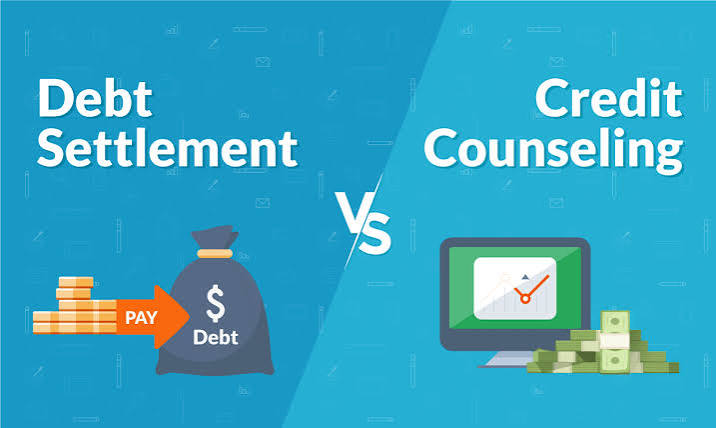
Nonprofit Credit Counseling vs Debt Settlement: 2026 Guide
⏱️ 10 min read · Last updated: 2026
With $22,400 spread across four credit cards, the choice between nonprofit credit counseling vs debt settlement gets real fast. These two debt relief paths are not the same, even though both promise relief. One lowers interest and organizes repayment; the other tries to cut balances, usually at a higher cost to your credit and your peace of mind.
- Nonprofit DMP fees: $0–$75 setup, then $25–$50 per month for 3–5 years (NFCC member agencies)
- Debt settlement fees: 15–25% of total enrolled debt, paid after each settled account (FTC Telemarketing Sales Rule prohibits upfront charges)
- Total cost comparison on $22,000 of debt: DMP ≈ $3,000–$4,200 in fees vs. settlement ≈ $3,300–$5,500 in fees plus potential tax on forgiven debt over $600
- DMP completion timeline: 3–5 years in most cases; settlement timeline: 2–4 years
- Credit score impact: DMP typically causes a 50–100 point dip initially; settlement can cause a 100–150+ point drop
As I dug into both options, I found that the difference is bigger than the sales pages suggest. Comparing nonprofit credit counseling vs debt settlement company options can turn a 14-year grind into a 4-year plan. Balance transfers and debt snowballs had already burned time, so I needed a cleaner route. Below, I break down the fees, timing, and credit effects so you can judge the trade-off without the sales pitch fog.
The two paths: what each option promises and what it doesn’t
Nonprofit credit counseling gives you a structured repayment plan through a certified counselor. It can lower interest rates, combine payments, and help you repay the full principal over time.
From there, the split becomes clear. Debt settlement works differently. A for-profit company asks you to stop paying creditors while it negotiates reduced balances. That can cut principal, but it also raises the risk of lawsuits, credit damage, and tax on forgiven debt over $600.
What nonprofit credit counseling does
Nonprofit credit counseling connects you with a certified counselor through an NFCC member agency. They review your finances, build a budget, and enroll you in a debt management plan (DMP). The DMP consolidates unsecured debts into one monthly payment with reduced interest rates (0–8%). You repay the full principal over 3–5 years.
What debt settlement does
Debt settlement involves a for-profit company that asks you to stop paying creditors and save in an escrow account. Then it negotiates lump-sum payments for 40–60 cents on the dollar and charges 15–25% of the original debt. This approach risks lawsuits, credit damage, and tax on forgiven debt over $600. Those differences matter a lot when comparing nonprofit credit counseling vs debt settlement company. No wiggle room there.
Should I use a nonprofit credit counselor or debt settlement for credit card debt?
For credit card debt under $35,000 with steady income, nonprofit credit counseling is usually better. It gives you lower monthly payments, lower interest, and less credit damage.
To make the choice easier, use this framework based on your situation:
| Your situation | Better fit | Why |
|---|---|---|
| $10K–$35K in credit cards, stable job | Nonprofit DMP | Lower total cost, interest rate reduction, no tax hit |
| $35K–$70K, struggling to make payments | Consider settlement | DMP payment may still be unaffordable; settlement reduces principal |
| Behind 90+ days, creditors calling | Nonprofit counselor first | Counselors can negotiate waived fees; settlement works before charge-offs |
| Being sued or garnished | Debt settlement lawyer | A debt settlement lawyer handles litigation |
| Debt is mostly medical, student, or tax | Nonprofit counseling | Settlement rarely handles these; counselors guide to repayment plans |
For most people with $10K–$35K in credit cards, starting with nonprofit credit counseling saves thousands and keeps the process simpler. Settlement companies advertise heavily because their fee structure is profitable, not because they are the best fit for average borrowers.
How the fees actually break down — and why the marketing obscures this
The fee difference is one of the biggest reasons nonprofit credit counseling often wins. On $22,000 of debt, a DMP usually has modest monthly costs, while settlement adds percentage-based fees and may create tax liability.
| Fee component | Nonprofit DMP | Debt settlement |
|---|---|---|
| Setup/enrollment fee | $0–$75 one-time | $0 upfront (FTC rule) |
| Monthly/ongoing fee | $25–$50/month | None directly — funded from escrow |
| Percentage fee | None | 15–25% of enrolled debt |
| Total fees on $22K | ~$3,000–$4,200 over 4 years | ~$3,300–$5,500 over 3 years |
| Tax on forgiven debt | None — you pay in full | Yes — forgiven amounts over $600 are taxable |
| Principal repaid | 100% ($22,000) | 40–60% ($8,800–$13,200) |
Settlement can reduce principal, but percentage fees and taxes narrow the savings. My DMP cost $4,200 more in principal but $1,800 less in total fees, with no tax risk and better credit preservation. For a deeper look, see how to compare debt relief options.
On $22,000 of debt, nonprofit DMP fees total $3,000–$4,200 over 4 years, while settlement fees run $3,300–$5,500 plus taxes on forgiven balances.
Which is cheaper long term, a debt management plan or debt settlement?
For most borrowers with $10K–$40K in debt, a debt management plan is cheaper long term. Settlement fees and tax liability often erase the savings from reduced principal.
On $22K, settlement might eliminate 50% of principal ($11K forgiven), but a 20% fee ($4,400) plus 22% tax on forgiven debt ($2,420) totals $6,820 in costs. A DMP repays full principal ($22K) with $3,600 in fees and no tax. The DMP monthly payment is lower ($533 vs. $890 minimum) and avoids major credit damage. For predictable costs and credit protection, nonprofit credit counseling is usually stronger.
The 501(c)(3) check that takes four minutes and saves you thousands
Not every “nonprofit” is genuine. Verify 501(c)(3) status with the IRS and check NFCC membership before you enroll. That quick check can protect you from scams.
- Step 1: Request the agency’s EIN. Reputable nonprofits will readily provide this.
- Step 2: Search the IRS Tax Exempt Organization database. If missing or revoked, avoid them.
- Step 3: Confirm NFCC membership at nfcc.org for counselor certification and fee transparency.
- Step 4: Check the Better Business Bureau and state Attorney General for complaints.
During research, I found a for-profit company posing as nonprofit. A quick IRS lookup revealed no 501(c)(3) status. Always check debt relief company legitimacy through state databases, especially in California, New York, and Texas where registration is required. Four minutes. That’s all it takes.
The mistake that cost me $2,800 (and the red flag I ignored)
Before enrolling in a DMP, I spoke with settlement companies. ClearPath Financial quoted 18% fees on my $22,400 balance ($4,032) and promised settlements in 24 months. The contract also used vague terms about escrow funding and refunds, which made the real cost and risk harder to judge.
I asked about creditor lawsuits. The rep said they were rare, but about 15% of settlement clients face them. ClearPath’s contract offered no protection against this. I walked away, but had already paid a $350 non-refundable fee to another company. High-pressure contracts with vague terms are classic debt relief scam red flags.
90 days in: what the debt management plan actually looked like month by month
Once I enrolled with an NFCC agency in March, the process moved quickly and the benefits became easier to see.
Week 1: Free consultation. The counselor reviewed my credit report, built a budget, and projected interest rate drops from 22.4% to 6.5%. My DMP payment: $533 monthly with a $50 setup fee.
Week 2: Enrollment processed. Three creditors accepted the DMP immediately; one required review. By month two, payments began, and credit reports showed “in a payment plan.”
By Day 90: All four creditors confirmed reduced rates (average 5.9%). Monthly payments fell by $357. The store card was handled separately, which kept the plan on track. Here’s the summary:
| Metric | Before DMP | After 90 Days | Change |
|---|---|---|---|
| Average interest rate | 22.4% | 5.9% | −16.5 points |
| Monthly payment | $890 | $533 | −$357/mo |
| Credit score | 642 | 631 | −11 points |
| Projected payoff timeline | 14 years | 4 years | −10 years |
| Total interest paid (projected) | ~$14,200 | ~$3,600 | −$10,600 |
The credit score dip was small compared with settlement’s typical 100–150+ point drop. Just as important, having one payment made the whole plan feel manageable. For more on credit recovery, see how to improve credit score after debt.
Common questions about nonprofit credit counseling vs debt settlement company
What is the difference between credit counseling and debt settlement?
Credit counseling restructures debt via a nonprofit DMP with reduced interest rates and full principal repayment. Debt settlement negotiates reduced balances but charges 15–25% fees and severely damages credit. Counseling is structural; settlement is eliminative.
How do I enroll in a nonprofit debt management plan?
Find an NFCC member agency, schedule a free consultation with debt statements, and let the counselor review your budget. They contact creditors to negotiate rates, then you make one monthly payment. Enrollment takes 2–4 weeks.
Nonprofit counseling vs debt settlement — which hurts credit less?
Nonprofit credit counseling causes a moderate 50–100 point dip initially, stabilizing within months. Debt settlement causes a 100–150+ point drop due to delinquencies during the stop-paying phase, with long-term credit report damage.
Why would a nonprofit still charge me a monthly fee?
Nonprofit agencies charge $25–$50 monthly to cover counselor salaries, payment processing, and support. Fees are modest, and many offer waivers for hardship. The “nonprofit” status means surpluses are reinvested, not distributed as profit.
How much does a debt management plan cost per month in 2026?
In 2026, DMPs charge $25–$50 monthly plus $0–$75 setup. Your payment depends on total debt, reduced interest, and plan length (3–5 years). For $22K debt, expect $475–$575 monthly including fees.
Should I use a nonprofit credit counselor or a debt settlement company for credit card debt?
For under $35K with stable income, nonprofit credit counseling is better—lower fees, less credit damage, and no tax liability. Settlement may suit debt over $40K where payments are unaffordable or bankruptcy is imminent.
Which is cheaper long term, a debt management plan or debt settlement?
A DMP is usually cheaper long term when accounting for settlement fees and taxes. On $22K, DMP fees are $3,000–$4,200, while settlement costs $3,300–$5,500 in fees plus $1,500–$3,000 in taxes. Net savings are smaller than advertised.
- Nonprofit credit counseling (DMP) costs $25–$50/month with no percentage fees; settlement charges 15–25% plus tax on forgiven amounts.
- On $22K debt, total cost difference is under $2,000, but credit score impact can exceed 100 points.
- Always verify 501(c)(3) status via the IRS database and check NFCC membership before enrolling.
- Settlement makes sense only for debt above ~$40K where DMP payments remain unaffordable.
The bottom line
Nonprofit credit counseling works best for most people with $10K–$35K in credit card debt. It usually costs less, avoids tax issues, and protects credit better than debt settlement. The process is also more predictable because you keep paying creditors while the counselor negotiates lower interest rates.
Debt settlement may fit some higher-debt situations, especially when monthly payments are no longer realistic. Even then, compare the fees, taxes, and credit impact before you commit. Start by calling an NFCC member agency for a free consultation. It takes under an hour and gives you real numbers to compare.
See also: debt settlement lawyer vs company
See also: how to avoid debt relief scams
See also: how to spot a debt relief scam
Related: Consumer Sentinel data
Related: fake debt collector scam
See also: credit counseling vs debt settlement
See also: debt relief options
See also: debt relief in [city]